
When to Replace Your Derby Wheels, Bearings, and Cushions
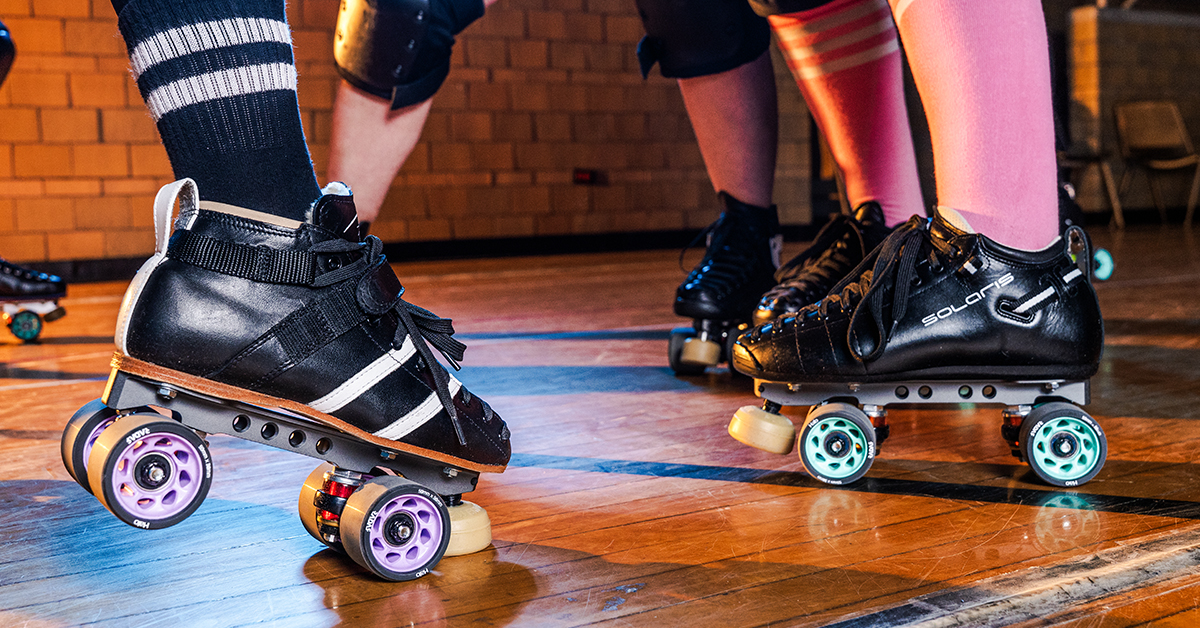
Derby components wearing out is not always an obvious progression. Instead, you’ll notice the performance quietly getting worse until eventually something gives out — sometimes mid-skating. Catching the signs early can help you stay ahead of the wear-and-tear curve and replace your derby gear when necessary.
Components on derby roller skates wear differently and on their own timeline. This guide walks through each one, so you know what you’re dealing with before it becomes a problem.
Wheels: When Should You Replace Them?
Derby wheels take abuse more than any other roller derby skate component. That said, the signs of wear aren’t always obvious at first glance. Here are a few things to keep an eye on:
- Flat spots: They come across as a subtle vibration or even a thump under your feet. Flat spots on derby wheels develop from hard stopping and heavy braking, and they don’t simply go away on their own.
- Uneven wear: The left side of your wheels takes the most punishment with the counter-clockwise direction of derby tracks. Rotating your wheels regularly will help with uneven wear. However, once the wear is significant, it’s time to grab a new set.
- Cracking or chunking: Visible urethane damage on your wheels means it’s time to replace them. No rotating or dealing with it in the meantime; deteriorating wheels are a safety issue.
- Grip loss: Something else that rotating wheels can help with, but it’s not a long-term solution. If traction feels off, it’s probably time to replace the wheels.
While derby surfaces don’t vary as much as some outdoor surfaces, surface type, along with frequency of use, will affect your wheels most.
In other words, if you’re using your derby skates over rough terrain, expect to replace them sooner. There’s also practice to consider. Derby skaters who practice several times a week will replace wheels more often than a more casual derby skater.
Bearings: When Should You Replace Them?
It’s easy to overlook a set of trusty bearings until the roll starts to feel wrong. If you’re unsure whether you should replace your bearings, consider the following:
- Rust or visible damage: Pretty straightforward. If there are visible splotches of rust or clear damage, it’s time to replace the bearings.
- Rough or grinding roll: Healthy bearings should spin cleanly and quietly. If you feel or hear a grind, something is probably wrong.
- Losing speed between pushes: A slowdown that’s faster than normal is a sign that the bearings aren’t spinning quite like they should be.
- Cleaning didn’t help performance: If something feels off, try to clean the bearings first. Replace them if a good clean doesn’t solve the problem.
Cushions: When Should You Replace Them?
Cushions sit inside your truck and control how your roller derby skate turns and responds. They’re the least visible component, and among the most sensitive.
Signs it’s time to replace your cushions include:
- Mushy or unresponsive turns: The cushions may be compressed or deformed if your skates feel loose.
- Visible wear: Cracking or misshapen cushions are a clear sign replacement is necessary.
- Hardness mismatch: Cushion hardness affects performance. Softer cushions help jammers who need a better turning range, while harder cushions help blockers who need stability. If your skating style has changed, consider updating your cushions as well.
Cushions can sometimes shift or compress unevenly without visible damage. Periodic hands-on checking is worth making a regular habit, as we’ll discuss next.
Maintenance Routine Check
Roller derby skate maintenance pays off most when you make it a habit. Here’s a quick before-and-after-skating maintenance routine to help you roll smoothly:
Before Skating:
- Wheels: Spin each wheel by hand. Feel and look for a wobble or unusual resistance. Rotate the wheels if the wear seems uneven.
- Bearings: Spin again, this time listen for grinding or rough rolling. Give them a clean, if necessary. They typically need a full clean every two to three months, and be sure to store your skates in a dry bag, away from damp environments to avoid rusting.
- Cushions: Press on the truck. If it feels mushy or unresponsive, replace the cushions.
- Hardware: Check axle nuts, kingpin, and toe stops. Tighten any components that are loose before you skate.
After Skating:
- Wipe down wheels and dry the frames
- Check for new flat spots or visible urethane damage
- Spin wheels again to catch any bearing changes after use
While you’re at it, removable insoles, like our R-Fit footbeds, are worth checking periodically for compression and wear.
Replace vs. Repair
The rule of thumb across all roller derby skate components: when in doubt, replace, especially if safety is in question. Bearings are an exception. Cleaning is always worth trying first, and often solves the problem without the cost of a new set.
- Wheels: No repair. Replace when the signs are there. Reminder: flat spots, cracking urethane, and grip loss.
- Bearings: Always try to clean them first. Replacement is only necessary if you’re still having performance issues after cleaning.
- Cushions: No repair. Cracked or deformed cushions won’t recover with any kind of “fix.” Replacement will be necessary here.
FAQs
There’s not a set timeline for wheel replacement. It all depends on how often you skate and what surfaces you’re skating on. The signs of wear and tear will tell you when to replace them.
Cleaning should always be the first step. Replace only if you still have poor performance afterwards.
This depends on how often you skate as well as your skating style. Clear deformation or cracking are good indicators their time is up.
No. Each component typically wears independently. Replace them based on signs rather than all together.